
Why premium brands should be obsessed with who is shaping taste
It still surprises me when I hear people say influencers are dead. It's a huge oversimplification, and for premium brands in particular, it misses a much more interesting opportunity: connecting your brand with the people who genuinely shape taste and influence what your customers aspire to. These people might call themselves influencers, creators, tastemakers or something else entirely. The label matters less than what they bring: a point of view, an audience that pays attention and the ability to make a brand feel relevant to the right people.
I'm talking about people whose choices others notice. They don't necessarily have huge social media followings (although reach, of course, is always useful). They might be a stylist whose wardrobe you want to emulate, an interior designer whose hotel recommendations you save, or an artist whose work, studio or favourite objects make you see everyday life slightly differently. For premium and design-led brands, these relationships can be incredibly powerful.
Think beyond the traditional influencer
Influencer marketing has become so established that it’s easy to think of partnerships in fairly straightforward terms: find someone with the right audience and a large following, give them the product, create some content and measure the reach. But there's another, much more interesting opportunity: connecting your product with people because of their taste, expertise and cultural relevance beyond social media.
It could be a stylist who genuinely enthuses about the artisanal handbag she always reaches for, an interior designer who raves about a boutique hotel that genuinely inspires her, an artist whose daily ritual is a morning coffee in her favourite mug from a beautiful ceramics brand. These aren't just product placements, they're associations and endorsements by people with a great eye, and those associations can be incredibly valuable.
The power of being chosen by someone your customer admires
When someone with genuine authority in a particular world chooses a product, they bring something advertising can't easily manufacture: their own credibility and taste.
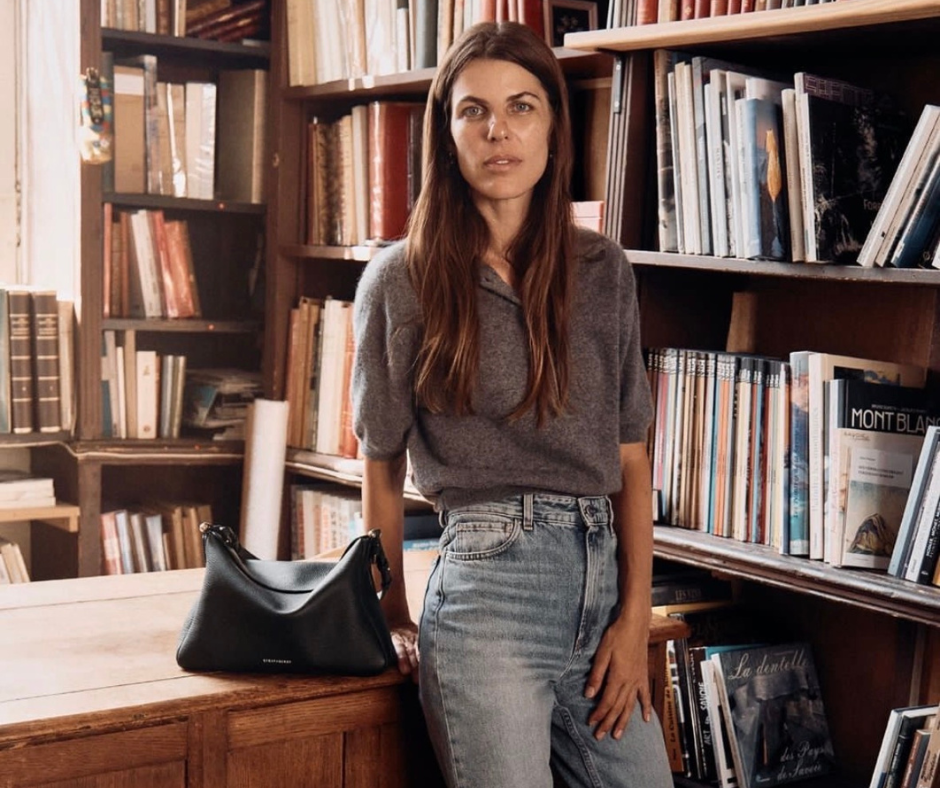
Fashion consultant Laura Vidrequin with The Sway bag by Strathberry
If an interior designer you admire recommends a hotel, you're interested because you trust her eye. If a stylist repeatedly carries the same handbag, you start to wonder what she sees in it. If an artist has surrounded herself with objects from a particular ceramics brand, the brand begins to feel like part of a world you'd like to inhabit. This is where it becomes interesting, because you're no longer just communicating what your product is; you're communicating something about the kind of person who chooses it.
Build a network, not a one-off campaign
The real opportunity isn't necessarily one big collaboration, either. It can be much more, or just as, powerful to build a network of people whose worlds naturally overlap with your own. A fashion brand might build relationships with stylists, photographers, designers and editors. A hotel could work with architects, chefs, artists, writers and interior designers. A ceramics brand could connect with chefs, florists, artists, interior designers and creative founders.
The point isn't to force a product into every possible conversation. It's to identify the people who naturally belong in your brand world and find authentic reasons for them to be part of it. Done consistently, these relationships build a richer network of associations around your brand. It's not a quick fix, and it shouldn't be treated as a one-off campaign. The real value comes from investing in relationships that make sense for your brand over the long term.
This is where strategy comes in
I think this is where brands often get it backwards. The best partnerships don't start with “Who could we collaborate with?” They start with a more fundamental question: “What do we want our brand to be known for?” From there, you can start asking:
What are the qualities you want people to associate with you?
Who already embodies those qualities?
Who does your customer already look to for inspiration?
Which worlds do you want your brand to belong to?
And perhaps most importantly: what can this person bring to your story that you couldn't create on your own?
Because when the right person enters the picture, they don't just give you access to their audience. They can give you a new perspective on your product, a new story to tell and a new group of people who might start to see your brand differently.
Beautiful content with a reason to exist
There's also a huge content opportunity here. Rather than creating content simply because you want another image, these relationships give you a genuine reason to tell a broader story. You can show how a designer uses your product in everyday life, exploring who they are, what they love about it and why it has earned a place in their world. You can explore an artist's creative rituals and ask how those rituals influence their creative practice. You can ask a stylist about the pieces they always return to and why, or create a city guide with someone whose taste perfectly reflects your brand.
The content becomes more interesting because there is an actual story behind it. And crucially, it should connect back to your wider brand positioning. That's the difference between a nice piece of content and a piece of brand building.
Your customers are looking for signals
Ultimately, people don't just buy premium products for their functional attributes. They buy into taste, identity, aspiration and belonging. They're taking cues from the people and brands around them about what's interesting, beautiful, desirable and worth paying attention to.
The opportunity for brands is to become part of those conversations, not by shouting louder, but by building relationships with the people whose choices already carry meaning. The most effective tastemaker partnerships don't feel like marketing, they feel like a natural meeting of worlds. And when you get that right, you're doing something much more valuable than chasing a spike in reach — you're building a brand with a world around it, one that feels credible, distinctive and worth being part of.
It's one of my favourite ways to support growing brands: identifying the people, partnerships and stories that can help build a world around their products. It's also a big part of the thinking behind my Storytelling Engine. If you're thinking about how to make your brand more distinctive, desirable and part of the right conversations, I'd love to hear from you.
For more thoughts on brand, storytelling and communications, sign up to my monthly newsletter, The Sunday Post.