
What premium kitchen brands are missing and why it matters more than they probably realise
I've been browsing kitchen companies lately. It’s still a distant dream at the moment (likely three years away, but it doesn’t feel too early to start plotting!). But I've come away from almost every website with the same feeling: vaguely impressed, but entirely overwhelmed. And with no idea how to tell one company apart from another. Which is a disappointing combination, when you think about what these companies are actually asking people to do, which is make one of the most significant financial investments they'll ever put into their home.
Same words, little meaning
The messaging, almost without exception, reads like a features list. Craftsmanship. Bespoke. British design. Handcrafted. Built to last. None of these things are wrong, but they're doing almost no work to deliver any sort of differentiation. "British design" in particular is a phrase carrying a lot of weight but with limited true meaning: it signals expense without explaining value, which actually puts me closer to anxiety than aspiration. What is the actual benefit of British design? Is it the supply chain, the maker relationships, a particular sensibility about materials or proportion? If there's a real answer, and there usually is, that's the story worth telling. Bespoke is another word that I’d love to banish entirely. I once ordered wardrobes that were sold to me by a nationwide furniture manufacturer as “bespoke”. Turns out they’re not bespoke in the sense that they are actually cut to fit my wonky Edwardian house. They’re only “bespoke” in the company’s definition, which is that they measure your space and then pick the parts that fit the closest, and plug the gaps. So now I have a good 10cm of dead space… You get my point.
When customers aren’t ready for proof
The real issue here is that these brands are leading with proof when their customers, on first landing on their websites, are still at the “seeking permission” stage. I haven't yet been convinced that a kitchen can be what I want it to be, so I’m not yet asking "but how do I know yours is good?" — I’m still sitting with a more personal question: which company is going to deliver the kitchen of my dreams?
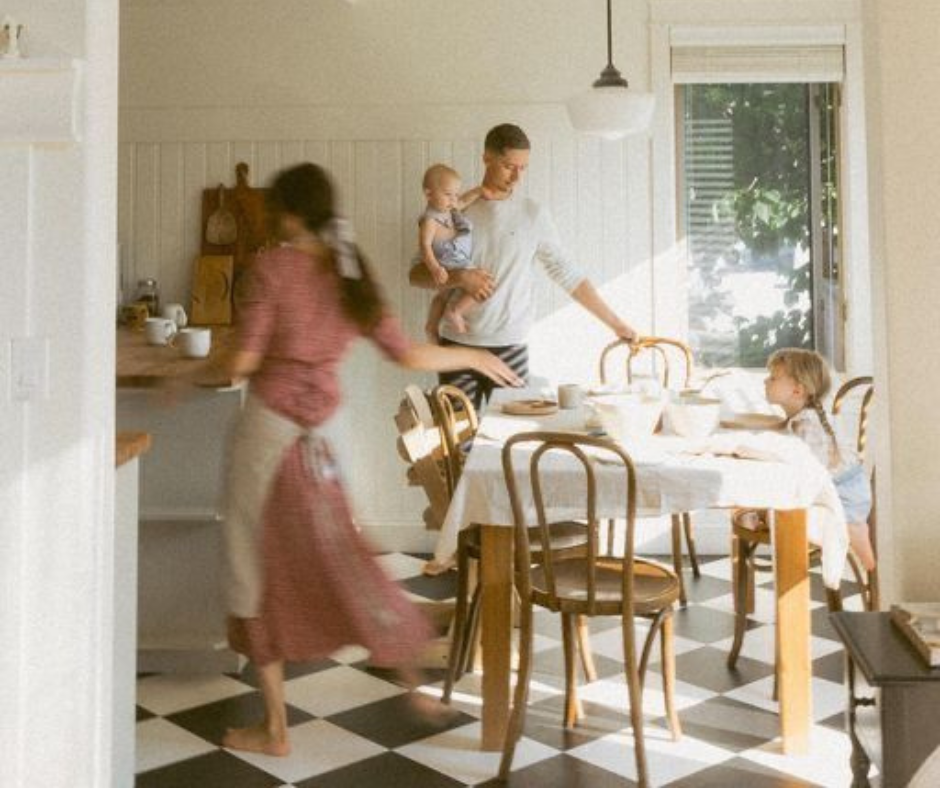
And why do so few images of kitchens have people in?
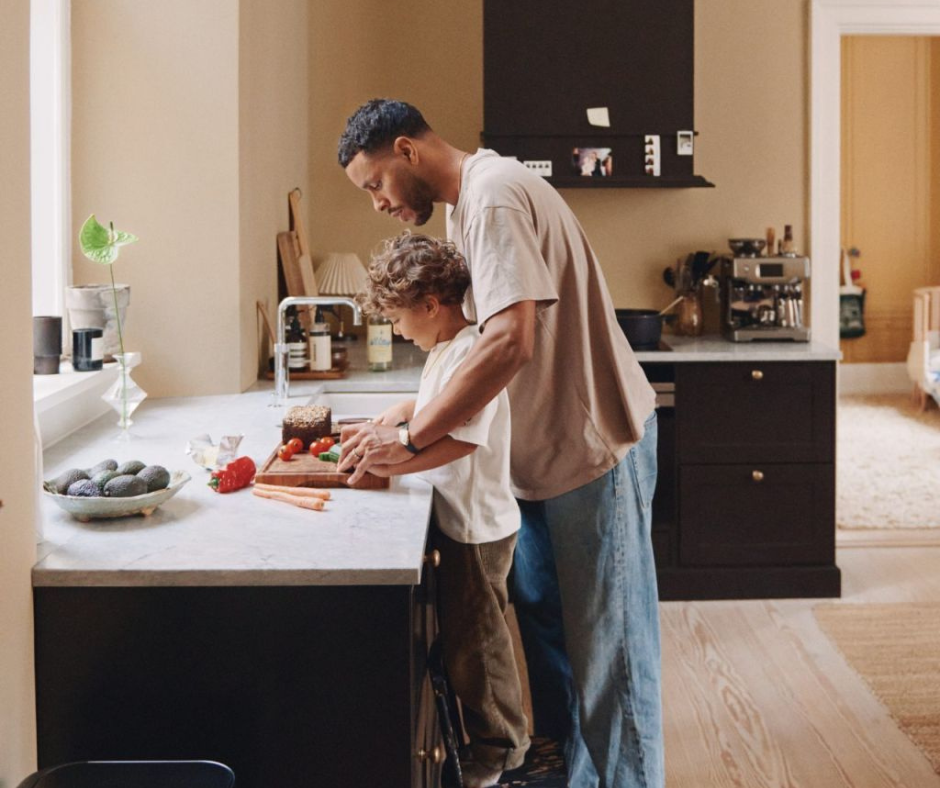
And that is an emotional question, not a financial one. A kitchen is expensive enough that most people will only do it once, which means what you're really asking someone to imagine is not a room but a version of their life — the one that develops in that space over the next ten or twenty years. The dinner parties and the school mornings, the Sunday afternoons and cups of tea when no one is in any particular hurry, the years when small children want to cling to your legs and be no more than five paces away, and the later years when they drift back in of their own accord. A kitchen holds all of that, or it has the potential to, and the brands that manage to make someone feel that possibility first — to genuinely spark the imagination about what that investment could mean for their family and that they can make it a reality — are the ones with real permission to talk about cabinetry and finishes and all the other things they're very good at. Don’t get me wrong, the features matter enormously, but they are a secondary proof point, and matter only once someone has already decided they want to create the room they’re after.
What I kept waiting for, on each website I visited, was the moment that made me feel something — the sense that this company knew not just what it made but why it mattered to me, and could help me see it. A new kitchen comes with an overwhelming number of decisions and possible options. I wanted to feel inspired and excited by the chance to create a truly special space; reassured that someone understood what the room was really about and why it’s so important. That moment very rarely came. Instead the craft arrived first, and in the end I stopped browsing, because, to be honest, I got bored.
A crowded category mistake
What seems to be happening is that the premium end of the kitchen market has confused proof of quality with the experience of quality. The craftsmanship narrative has become so ubiquitous that it's essentially invisible because everyone is saying the same thing, and the signals that were once genuine markers of distinction have become the status quo. For any brand prepared to lead differently, to open with imagination rather than specification, and trust that the quality will speak for itself once someone is already leaning in — there's a genuinely open space, and it's largely unclaimed.
How brands can win
It would mean leading with the life the customer is hoping for rather than the product you make, putting the reader inside the room they're trying to create, and then earning the right to explain how you'll get them there. That can sound scary to companies who put so much time and focus into the actually making, but it’s where the real opportunity for growth and differentiation lies. It means trusting that emotion and quality don't compete: telling people their kitchen will last the test of time and inspiring them that it'll be the room that holds those precious moments of daily life that really matter aren't separate messages — one is the promise, and the other is why the promise matters.
The brands that get this right won't just win more clients — they'll be the ones people remember wanting, long before they were ready to buy.
If you're a kitchen brand and this feels relevant, my Applied Brand Positioning service is built around exactly this kind of challenge — finding the story that's already there, and making sure it's the first thing people feel.