
The future of brand building is handmade
I’ve been thinking a lot about what brands will need to do differently over the next few years, and one thing I keep coming back to is something that could be seen as almost completely at odds with where technology is taking us: the future of brand building is handmade.
I don’t mean that we’re all about to abandon our laptops and start weaving our own baskets and communicating by fax (although there are some genius products taking us back to a life before screens, like Yoto and Brick). Technology, AI and automation are incredibly useful. But as more of what we see, read and interact with is created by technology, I think the things that have clearly been made by human hands are going to become increasingly valuable.
And actually, this isn’t entirely a reaction to AI. It’s been building for a while.
The growing value of the real world
We spend an enormous amount of time looking at screens, and there’s a growing desire to reconnect with the physical world; to make things, learn things, meet people, visit places and generally do something that doesn’t involve tapping a rectangle of glass (or whatever it’s made of!).
You can see it in travel, where the most interesting itineraries increasingly involve getting under the skin of a place rather than simply seeing its highlights. Learning to cook with someone who grew up there, visiting a ceramicist’s studio, spending an afternoon with a local weaver, going behind the scenes with a maker, learning a traditional craft. These experiences are memorable precisely because they can’t easily be replicated, and because they connect you to a real person, a real place and a real piece of culture.
Make something with someone
The most interesting brands are already onto this. And if I were building a brand plan for 2027, I’d be looking seriously at creative collaboration as a way to make the brand more distinctive.
There is an almost ridiculous amount of creative talent out there to work with. Basket makers, embroiderers, weavers, ceramicists, illustrators, printmakers, woodworkers, miniature makers, textile artists, jewellers, photographers, painters… and probably another 47 types of maker I’ve forgotten. You don’t need to be a craft brand to work with them, either.
A hotel could commission a local artist to create something specifically for its rooms. A travel company could collaborate with a basket maker on something guests can take home. A fashion brand could work with an embroiderer on a limited run. A homeware brand could invite a ceramicist to reinterpret one of its bestsellers. A children’s brand could commission an illustrator to create a world around a particular collection.
The possibilities are pretty much endless, which is part of the point. Because the output isn’t just a nice thing. It’s something unique — and uniqueness is becoming harder to come by. And some brilliant brands are already doing it.
Luxury stationer Smythson has released a playful new collection (see here) with artist Thomas Lélu. Liberty’s 2026 beauty advent calendar has been designed by illustrator Clym Evernden and brought to life through animated miniature creative by Paperholm’s Charles Young. And fragrance brand Ffern is working with Pembrokeshire-based artist Jackie Morris on the artwork for its autumn 2026 fragrance, as part of its ongoing commitment to artisanship.
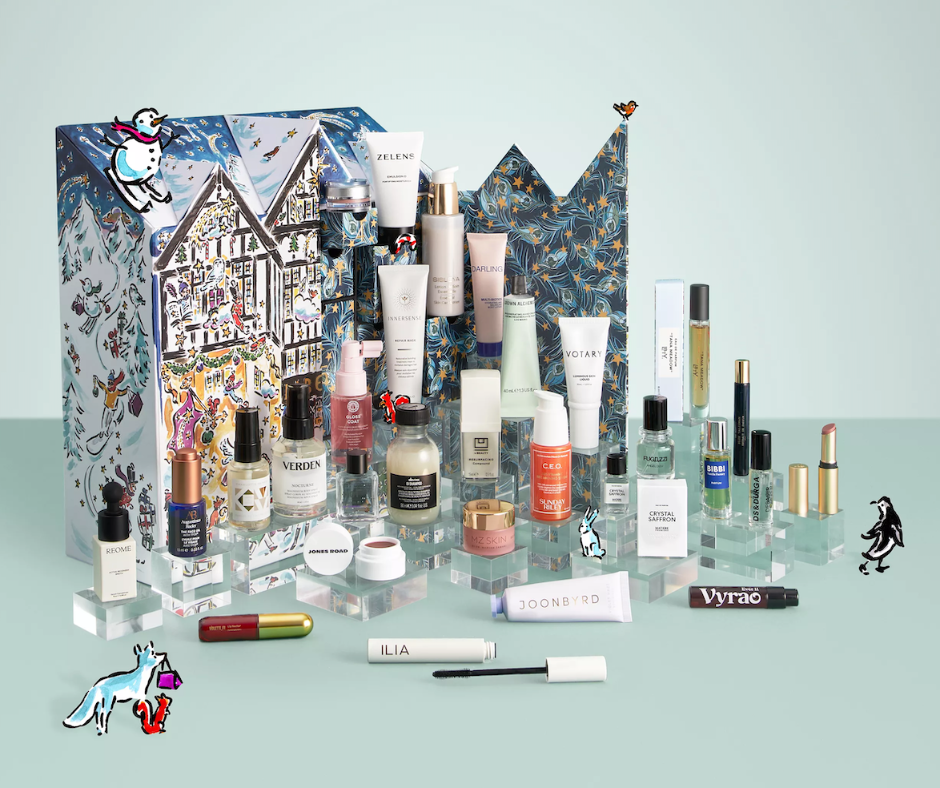
Liberty’s 2026 Beauty Advent Calendar, illustrated by Clym Evernden
When technology makes it easier for everyone to produce broadly similar-looking images, write broadly similar-sounding copy and generate broadly similar ideas, the value of something that exists because a particular person made it starts to increase. There is a story behind it, a process behind it, imperfections in it, and a human at the heart of it.
For ecommerce brands, this can be particularly interesting. A collaboration with a maker can create a genuinely limited edition, rather than manufacturing artificial scarcity around something that could theoretically be produced forever. That gives people a reason to pay attention, a reason to buy now, and something worth talking about afterwards. And, conveniently, and not by accident, it gives the marketing team a lot to work with.
Because good collaborations are basically content and storytelling machines. There’s the maker themselves, their story, their process, their materials, their inspiration, the place they work, the culture they’re part of, the making of the thing, the finished product and, ideally, a few lovely photographs of hands covered in clay or piles of colourful thread or a workbench that makes you immediately want to quit your job and dedicate your life to a creative practice.
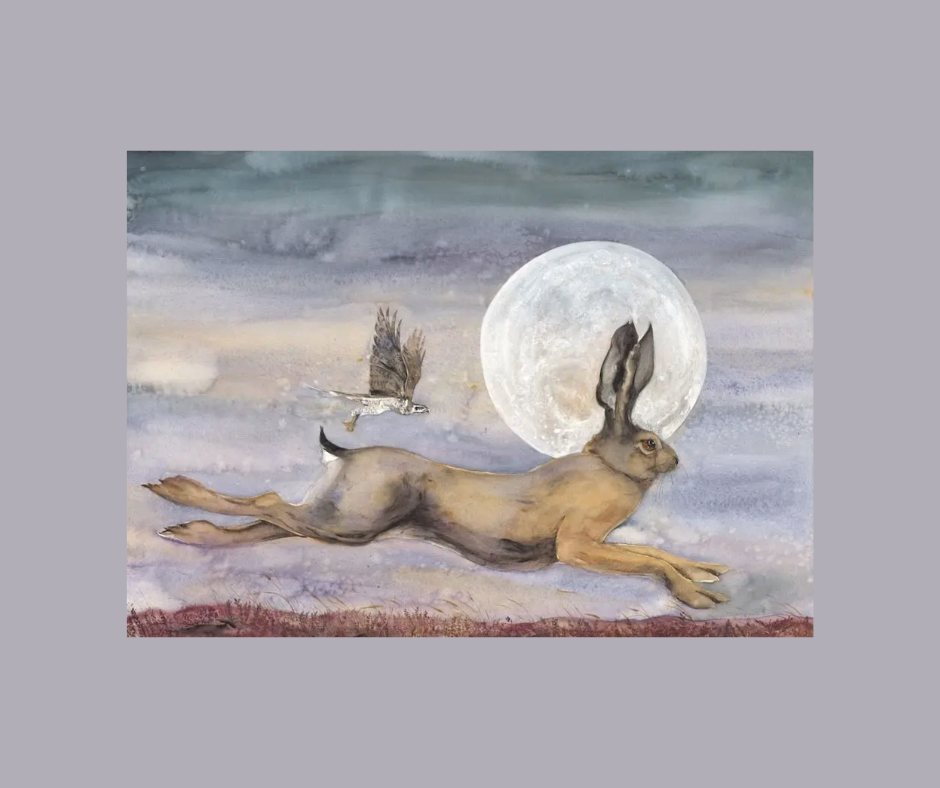
Shape Shifter, by celebrated illustrator Jackie Morris, in her signature watercolours, for Ffern’s Autumn 26 fragrance.
It also gives brands a way to participate in wider culture rather than endlessly talking about themselves, and that is increasingly important.
Working with a maker, artist or craftsperson brings a different perspective, voice, identity and cultural reference point into a brand, particularly when the collaboration is rooted in a real relationship rather than a brand simply borrowing an aesthetic because it happens to be trending. In travel, I think this is even more powerful.
The best travel brands have always sold more than a bed, a flight or an itinerary. They sell a sense of place. Working with the people who actually make things in that place is one of the most effective ways to deliver that. It gives travellers a way to understand somewhere through the people who live and work there.
Why this matters even more in the age of AI
Which brings me back to AI. When you can generate an image of almost anything in seconds, there’s something particularly appealing about an object that took someone three days to make. But this isn’t about framing this as humans versus technology. It’s more interesting than that.
I think the opportunity is for brands to use technology to make their businesses smarter and more efficient, while deliberately creating more opportunities for human creativity, collaboration and connection in the places where it actually matters, because ultimately, people still respond to things that feel real.
They want to know who made something. They want to hear the story. They want to see the process. They want to experience something they couldn’t have experienced anywhere else. They want to buy something that feels like it has a point of view. And increasingly, they want to get off their screens.
So if I were putting together a brand plan for 2027, I’d be asking: who could we make something with? Not because handmade is suddenly fashionable, or because AI means we need to prove we’re still human, but because working with talented people to create something genuinely original is one of the simplest ways a brand can become more interesting, more distinctive and more connected to the world around it. And I suspect that’s not a trend that’s going anywhere.
If this has got you thinking about what your brand could make, collaborate on or create next, I’d love to help. Drop me an email— I always love an intro chat.
And if you’d like more ideas on building interesting, distinctive brands, you can sign up to my newsletter, The Sunday Post, here.