
When luxury travel meets cinematic storytelling: what brands can learn from Belmond's collaboration with Baz Luhrmann
Brand collaborations are one of the most underused tools in marketing. When they're done well — when the fit is genuine and the creative thinking goes deep — they can do things that almost no other approach can: they can make a brand feel more itself, more vividly, than it could on its own.
That's what's happened with Belmond's collaboration with filmmaker Baz Luhrmann and costume designer Catherine Martin on a redesigned carriage for the British Pullman. It's a genuinely smart piece of brand thinking, and worth unpacking.
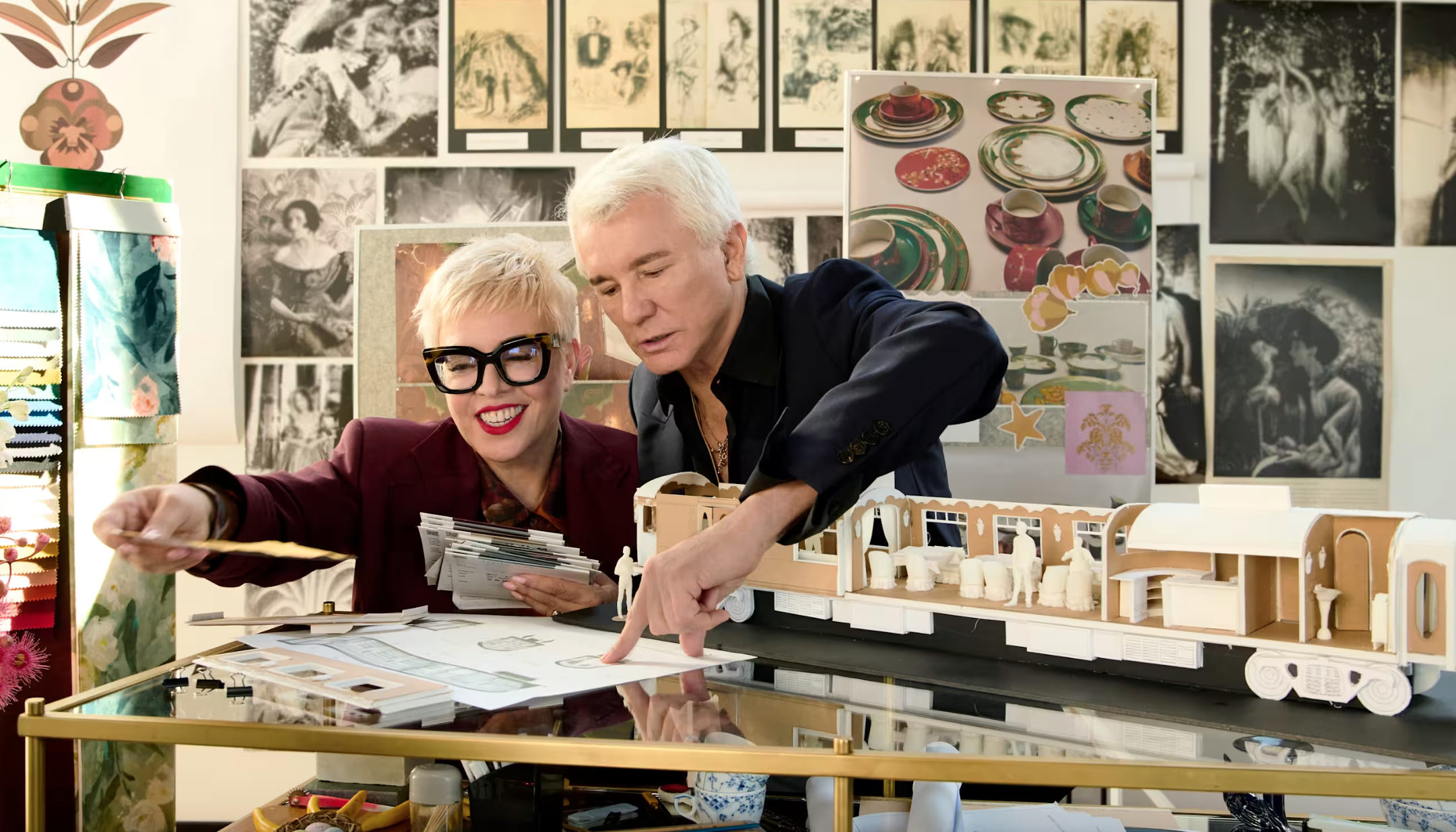
Catherine Martin and Baz Luhrmann
The fit actually makes sense
Bringing in someone like Baz Luhrmann — known for Moulin Rouge!, The Great Gatsby, Elvis — is a bold move. His whole creative signature is theatrical, immersive, emotionally heightened. That could easily swamp a brand partnership if the fit wasn't right.
But it works here because Belmond and Luhrmann are doing the same thing with different tools. Belmond has always framed its trains and hotels around atmosphere and slow travel — the idea that you're stepping into another world, another rhythm of life. Luhrmann's films do exactly that. So rather than feeling like a celebrity name-drop, the collaboration feels like two creative sensibilities that were always pointed in the same direction.
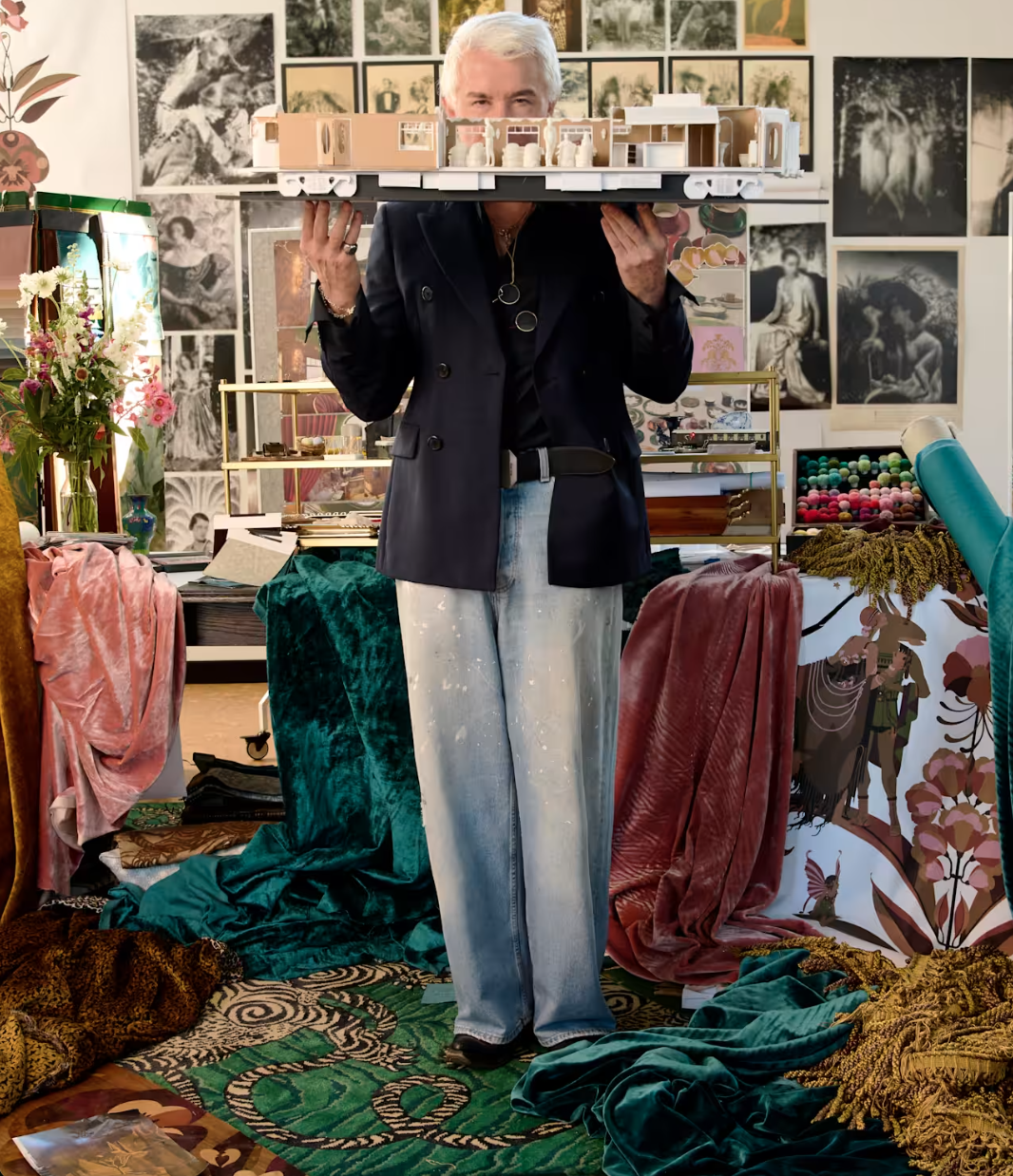
Baz Luhrmann for Belmond
They gave the carriage a character
This is the most interesting decision in the whole project. The redesigned carriage isn't just beautifully decorated — it's built around a fictional woman named Celia, a glamorous, well-travelled figure whose imagined life story shapes the mood and detail of the entire space.
A character gives you so much more to work with than a colour palette does. You can build menus around her, write editorial content, develop social narratives that unfold over time. The carriage becomes a storytelling platform rather than just a beautiful room on wheels — and that's a meaningful distinction for any marketing team trying to sustain momentum after launch day.
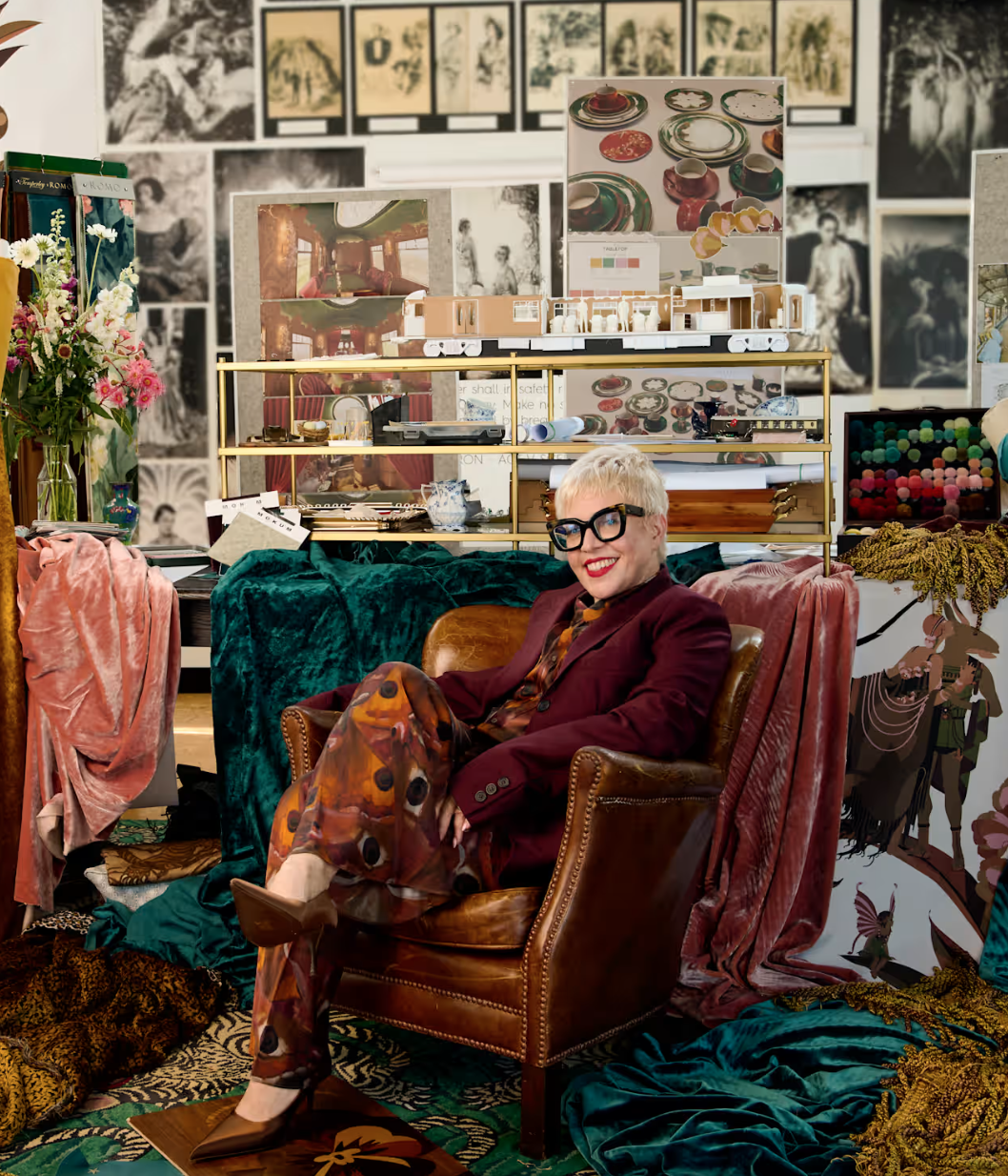
Costume designer Catherine Martin
It's about theatre, not just transport
There's something nicely counter-intuitive about luxury train travel right now — the appeal is the slowness. You're not trying to get somewhere efficiently. You're trying to inhabit the journey itself.
Belmond has understood that for a long time, and Luhrmann's involvement deepens it. His work is always about recreating a heightened, romantic version of a historical world, and putting that sensibility inside a Pullman carriage feels entirely natural. It doesn't add something foreign to the brand — it turns up the volume on what was already there.
What smaller brands can actually take from this
The budget here is clearly significant, but the underlying principles genuinely aren't budget-dependent. A few thoughts on how to apply this at a smaller scale:
Find collaborators who share your values, not just your audience. The most common mistake in brand partnerships is chasing reach. A local ceramicist, an independent filmmaker, a regional chef — if their creative philosophy aligns with yours, the collaboration will feel coherent in a way that a bigger, misaligned name never will. Coherence is what makes these things last.
Give the project a narrative frame.You don't need a fictional character with a full backstory, but having some kind of conceptual anchor — a theme, a world, a question the collaboration is exploring — gives your content team something to keep building from. Without it, even beautiful work tends to exhaust itself quickly.
Think about what the collaboration produces beyond the object itself. The carriage is the centrepiece, but the real output is months of content, editorial, and storytelling. Before you start, ask: what will we actually be able to say about this, and for how long? If the answer is "one press release and a few photos," the brief probably needs more depth.
Use the collaboration to say something you already believe. The reason this Belmond project works is that it doesn't feel like borrowed credibility — it feels like the brand expressing its own identity more fully. The best collaborations amplify what's already true about you, rather than papering over what isn't.
At any budget level, that last one is the thing worth holding onto. If you’re interested in more ideas and insights on brand building and comms, sign up to my newsletter, The Sunday Post, that you can find here.